How Can I Tell If I'm Making the Right Financial Decisions?
How Can I Tell If I'm Making the Right Financial Decisions?
Every major financial decision asks you to do the same impossible thing: predict the future. Whether it’s paying down debt, saving for retirement, or deciding if now’s the time to buy a home, the question underneath is always the same… what will this choice mean years from now?
That’s why it’s easy to feel uncertain about your finances. It’s not because you’re “bad at money.” It’s because every choice comes with uncertainty, and no one shows you the full picture of how your choices connect.
Information Isn’t the Problem
We’re surrounded by financial advice. Articles tell you how much you should save. Podcasts debate investing strategies. Social media is full of people explaining the “right” way to build wealth.

Some of it is good, some of it is just plain incorrect. But that’s not the real problem.
The problem is that every piece of advice looks at one decision in isolation.
Imagine you’re trying to put together a puzzle, but someone keeps handing you individual pieces without showing you the picture on the box. Each piece is important, but it’s difficult to know where it belongs.
That’s what personal finance can feel like these days.
You learn about retirement one day, emergency savings the next, and paying down debt after that. Each topic makes sense on its own. But life doesn’t happen one topic at a time. Your financial decisions are connected, and changing one part of the picture has an impact on the others.
When you can’t see those connections, even good advice can leave you wondering if you’re making the right choice.
Why Good Decisions Still Feel Uncertain
Many people assume confidence comes from knowing more. In reality, confidence comes from understanding more.
Think about planning a road trip.
If someone tells you to turn left in five miles, that’s useful information. But if you don’t know why you’re turning, or what comes after that, it’s really hard to know when or if you’re going to reach your destination.
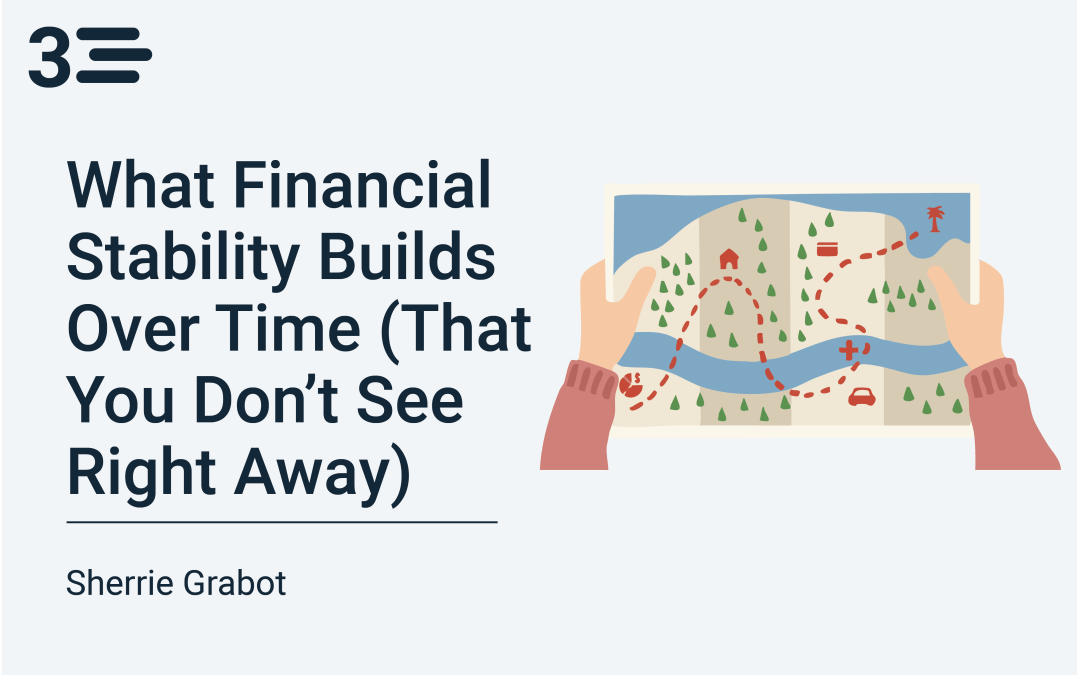
Now imagine seeing the entire route on a map. The turn hasn’t changed, but because you know where and why it fits in your journey your confidence goes up.
Financial decisions work the same way.
Knowing you should contribute to your retirement account is helpful. Understanding how that decision affects your emergency savings, debt payoff, future home purchase, and long-term goals (and how to balance them all) is what creates confidence.

This kind of perspective changes not only how decisions get made, but how confident you are when making them.
Knowing The Right Next Step
When everything feels important, it’s easy to feel stuck. But you don’t need to solve every financial question all at once. You only need to understand which decision matters most right now.
A simple way to find it: think of your debt, your savings, and your retirement contributions as three connected accounts, and ask which one is currently working against the other two.
High-interest debt usually outweighs what you’d gain by investing elsewhere, so it often comes first. If your debt is already manageable but a surprise expense would set you back, building a small emergency cushion probably matters more right now than adding to retirement. And if both of those are already solid, increasing your retirement savings is likely the decision that moves you furthest.

The point isn’t that one answer fits everyone. The point is that your next step should make sense within the full context of your financial life.
That’s what turns a collection of financial tasks into real financial momentum.
Confidence Is Built One Clear Decision at a Time
Most people aren’t looking for perfect predictions.
They’re looking for reassurance that the choices they’re making today are leading somewhere meaningful. That reassurance doesn’t come from collecting more tips.
It comes from seeing how your decisions fit together.
Once you understand how today’s choices connect to tomorrow’s possibilities, your financial decisions stop feeling like guesses. They become connected steps that move you toward the future you actually want.

Confidence doesn’t require certainty about everything that lies ahead. It begins when you understand why your next decision makes sense.